

About The Work
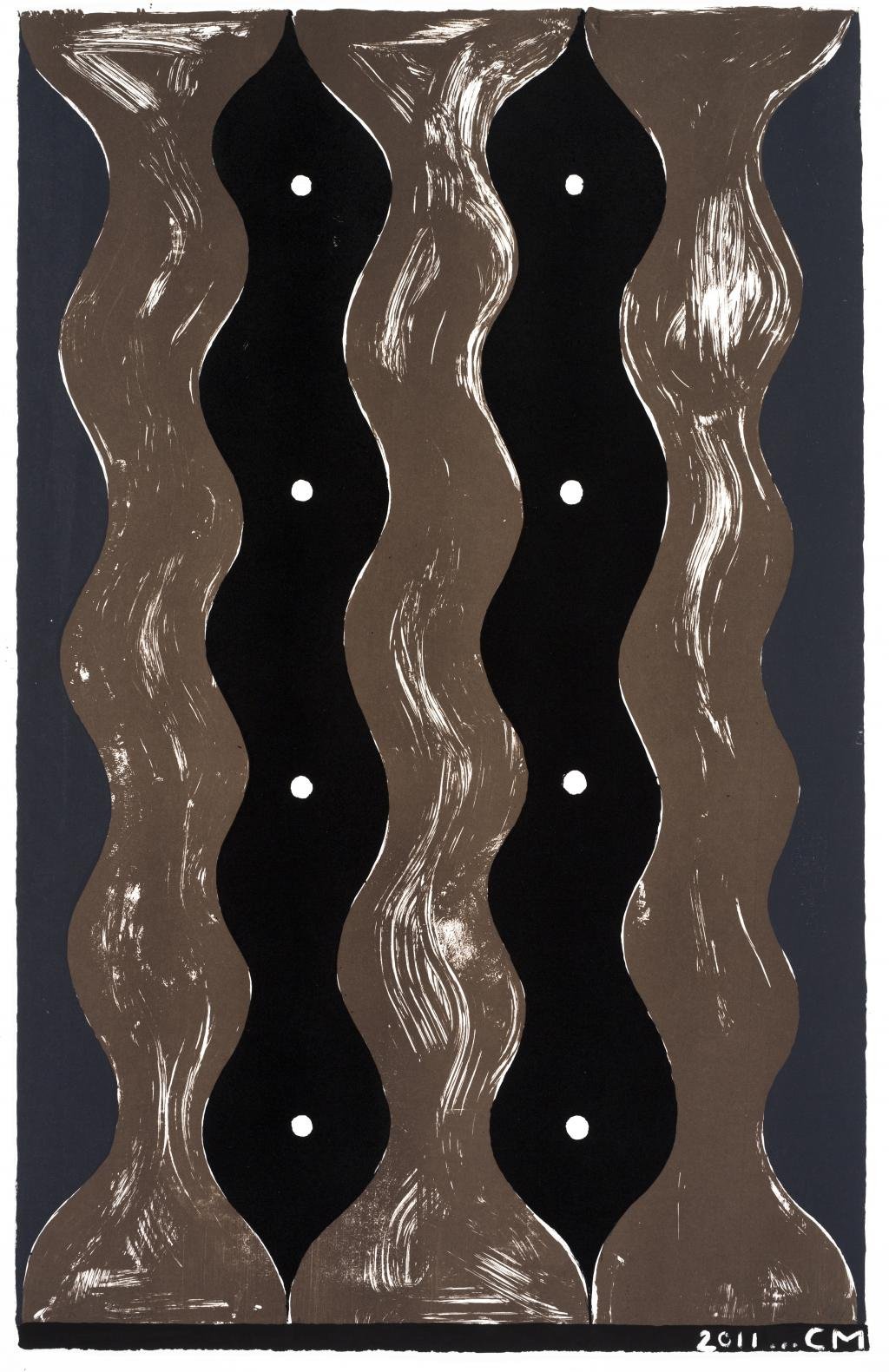
Vaguely suggestive of a musical score, this composition by Martin sets muted brown, dark grey, and black in a line of waves. Employing actual tire rubber dust to paint the black tones, the work seems to originate from the tire treads, although there are also deep poetic connotations in the lines that originate from Martin's emotional associations with the music of James Brown, Marvin Gaye, Issac Hayes, Curtis Mayfield, and The Temptations.
About Chris Martin
From The Magazine
- News & Events: The Great Vitamin P3 Painting Hunt
- Interviews & Features: Art Advisor Joyce Varvatos on Collecting to Fit Your Personal Style—Whatever It May Be
- Interviews & Features: Glitter, Neon, and Good Old Fashioned Paint: Three Abstract Painters Pushing the Medium Forward
- News & Events: The Vitamin P3 List: Discover the 108 International Artists Who Are Revolutionizing Painting Today
- News & Events: 12 Galleries to Know in the Thriving Brussels Art Scene
Screenprint with ground tire rubber flocking on black areas.
44.00 x 27.75 in
111.8 x 70.5 cm
Signed and numbered by the artist.

About The Work
Vaguely suggestive of a musical score, this composition by Martin sets muted brown, dark grey, and black in a line of waves. Employing actual tire rubber dust to paint the black tones, the work seems to originate from the tire treads, although there are also deep poetic connotations in the lines that originate from Martin's emotional associations with the music of James Brown, Marvin Gaye, Issac Hayes, Curtis Mayfield, and The Temptations.
About Chris Martin
From The Magazine
- News & Events: The Great Vitamin P3 Painting Hunt
- Interviews & Features: Art Advisor Joyce Varvatos on Collecting to Fit Your Personal Style—Whatever It May Be
- Interviews & Features: Glitter, Neon, and Good Old Fashioned Paint: Three Abstract Painters Pushing the Medium Forward
- News & Events: The Vitamin P3 List: Discover the 108 International Artists Who Are Revolutionizing Painting Today
- News & Events: 12 Galleries to Know in the Thriving Brussels Art Scene
- Ships in 10 to 14 business days from New York.
- This work is final sale and not eligible for return.
- Questions about this work?
- Interested in other works by this artist or other artists? We will source them for you.
- Want to pay in installments?
Contact an Artspace Advisor
advisor@artspace.com