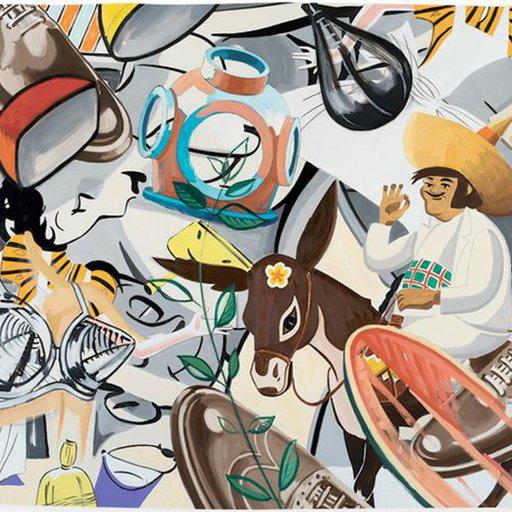
Portrait of Merce, 1984 - Robert Rauschenberg
About the Work
About Portrait of Merce
Frequently working as the stage manager for the Merce Cunningham Dance Company in its first decade, Robert Rauschenberg had a close, collaborative relationship with its founder. Borrowing techniques from his famous "Combines," Portrait of Merce features collaged fabric, paper, and ...Read More
Frequently working as the stage manager for the Merce Cunningham Dance Company in its first decade, Robert Rauschenberg had a close, collaborative relationship with its founder. Borrowing techniques from his famous "Combines," Portrait of Merce features collaged fabric, paper, and drawings, juxtaposing artistic and everyday images in a colorful, vibrant composition.Read Less
About the Artist
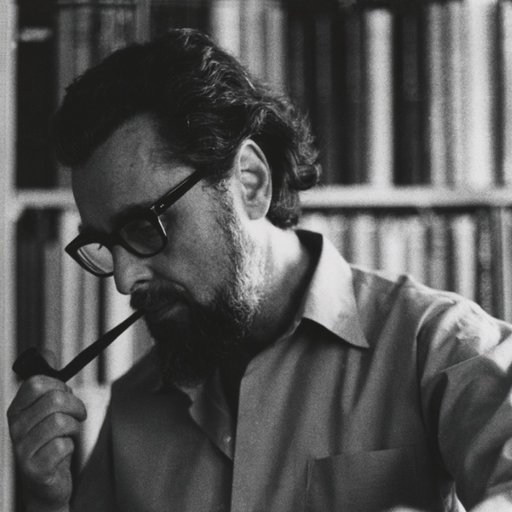
About Robert Rauschenberg
Robert Rauschenberg imagined himself first as a minister and later as a pharmacist. It wasn't until 1947, while in the U.S. Marines that ...Read More
Robert Rauschenberg imagined himself first as a minister and later as a pharmacist. It wasn't until 1947, while in the U.S. Marines that he discovered his aptitude for drawing and his interest in the artistic representation of everyday objects and people. After leaving the Marines he studied art in Paris on the G.I. Bill, but quickly became disenchanted with the European art scene. After less than a year he moved to North Carolina, where the country's most visionary artists and thinkers, such as Joseph Albers and Buckminster Fuller, were teaching at Black Mountain College. There, with artists such as dancer Merce Cunningham and musician John Cage, Rauschenberg began what was to be an artistic revolution. Soon, North Carolina country life began to seem small and he left for New York to make it as a painter. There, amidst the chaos and excitement of city life, Rauschenberg realized the full extent of what he could bring to painting.
Rauschenberg's enthusiasm for popular culture and his rejection of the angst and seriousness of the Abstract Expressionists led him to search for a new way of painting. He found his signature mode by embracing materials traditionally outside of the artist's reach. He would cover a canvas with house paint, or ink the wheel of a car and run it over paper to create a drawing, while demonstrating rigor and concern for formal painting. By 1958, at the time of his first solo exhibition at the Leo Castelli Gallery, his work had moved from abstract painting to drawings such as Erased De Kooning (1953) (which was exactly as it sounds) to what he termed "combines." These combines (meant to express both the finding and forming of combinations in three-dimensional collage) cemented his place in art history.Read Less
Description
Collage, pochoir, silkscreen, and hand drawing.Shipping
Ships in 10-14 business days.This work is final sale and not eligible for return.
Additional Information
This work is unframed.ARTSPACE ADVISOR
We are here to help. Please let us know if you have any questions about this work, the artist, collecting in general or artists you'd like to see on Artspace. Please call us at (212) 675-5804 or email chairman@artspace.com and we'll respond within 24 hours.